Restoring a Mercedes Pagoda with Kreon 3D scanning
Restoring a classic car calls for craftsmanship and a detailed understanding of its original construction. When the project also involves changing the vehicle’s design, accurate dimensional information becomes particularly valuable.
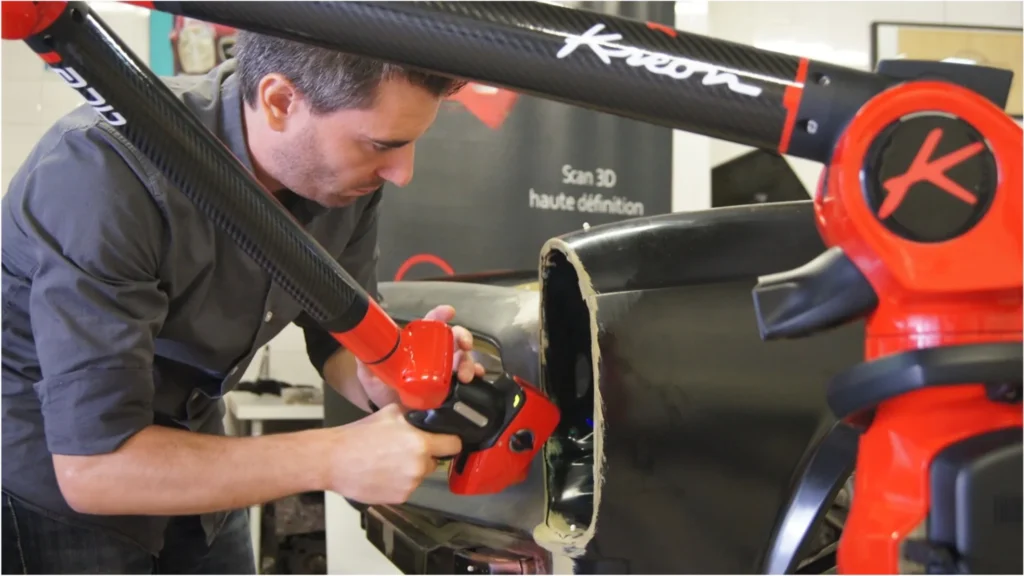
A case study from Kreon shows how engineering company Digimeca used a Kreon ACE measuring arm with a Skyline Eyes 3D scanner to support an unusual Mercedes Pagoda restoration at Ateliers Paul Bracq in Bordeaux.
A distinctive project with a family connection
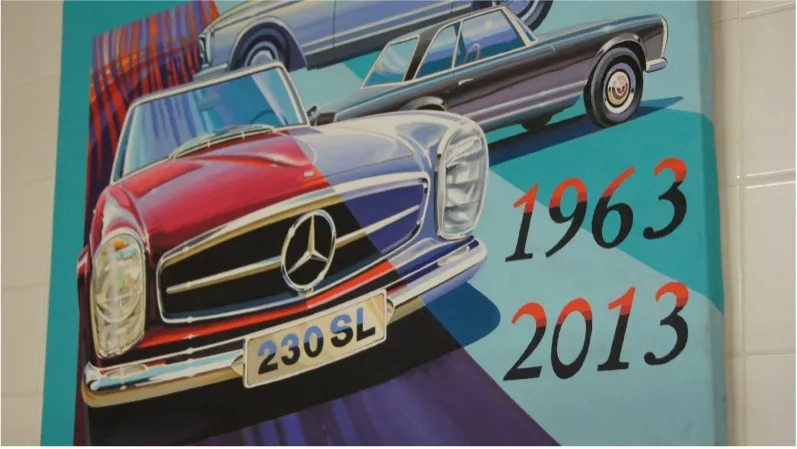
Designer Paul Bracq contributed to the Mercedes Pagoda, the 230 SL model introduced in 1963. In 2013, his son Boris established Ateliers Paul Bracq to restore the vehicles associated with his father’s work.
For this project, the workshop planned to transform a Pagoda convertible into a coupé with two additional rear seats, a configuration never originally produced.
The proposed conversion required extending the vehicle by cutting it behind the doors and realigning its structural and body components. Creating new bodywork, including the roof and doors, called for a detailed digital representation of the existing car.
Ateliers Paul Bracq brought in Digimeca to capture that information.
Scanning around the workshop’s activities
Digimeca already used its ACE arm and Skyline Eyes scanner for reverse engineering older parts without CAD data, capturing manually developed prototypes and preparing existing components for reproduction through 3D printing.
The Pagoda presented a larger task: digitising the entire bare body while mechanics continued their restoration work.
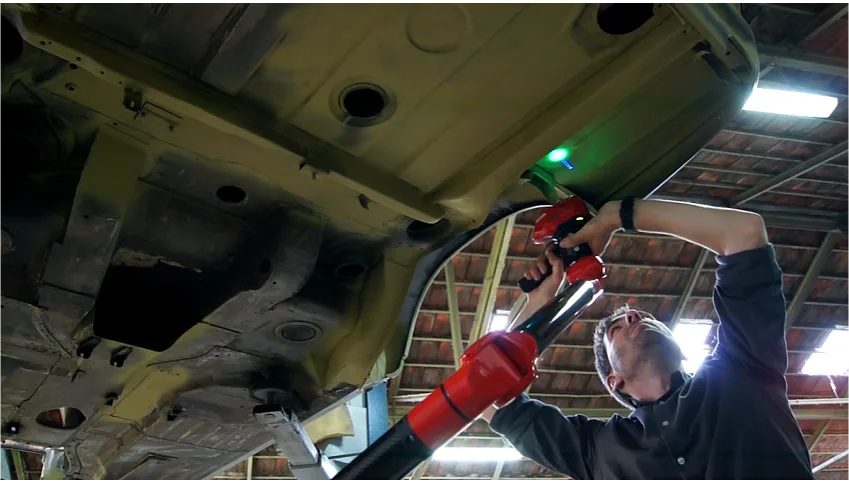
Scanning therefore had to take place in stages. The team scanned the body at ground level before raising it to access the lower sections and underside. Reference spheres positioned on the bodywork provided reference points as the measuring arm moved around the vehicle.
The body included both painted and unpainted sheet metal, and the Skyline Eyes scanner adapted to these different finishes. Kreon’s case study estimated that scanning the complete bodywork would require two days.
Building a digital foundation for new parts
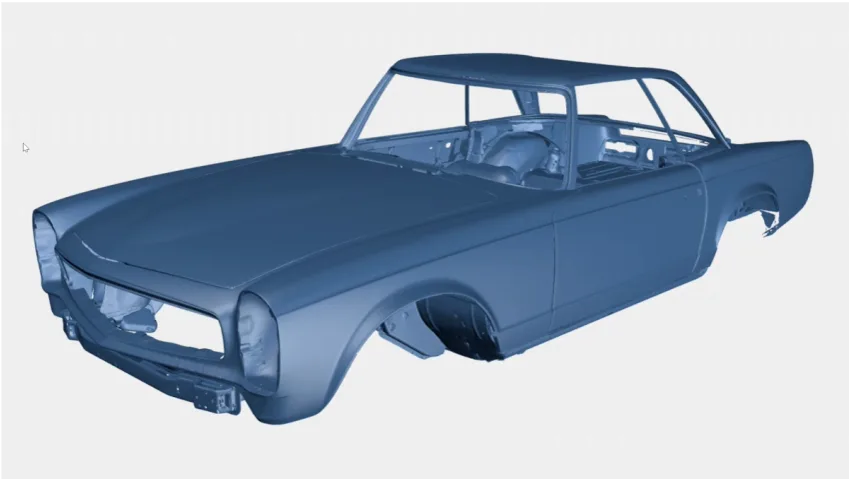
During scanning, Geomagic Wrap generated a polygon mesh representing the vehicle’s surfaces. The software also supported alignment, surface cleaning and hole filling.
The next stage described in the case study was to use the completed mesh as the basis for reverse engineering. Boris Bracq planned to model the surfaces in Rhinoceros 3D, then use the resulting CAD data to manufacture the new components.
The digitisation also formed part of a wider conservation project, alongside archiving the vehicle’s original technical documentation.
Combining measurement with craftsmanship
The project illustrates how portable 3D scanning can support skilled restoration work by providing the geometric information needed for modelling and manufacture.
Boris Bracq, founder of Ateliers Paul Bracq, explains: “With this restoration, and in our quest for perfection, we bring together the best of modern digital technologies with traditional manual skills.”
Portable measurement from Status Metrology
Status Metrology is a UK distributor of Kreon portable measuring arms, with systems for tactile measurement and 3D scanning.
If you need to capture existing components for inspection or reverse engineering, our team can discuss your application and help identify a suitable arm, scanner and software configuration.
Case study courtesy of Kreon, featuring Digimeca and Ateliers Paul Bracq.
Our Proud Partners







 +44 (0) 1159 392 228