
Is a CMM Worth the Investment?
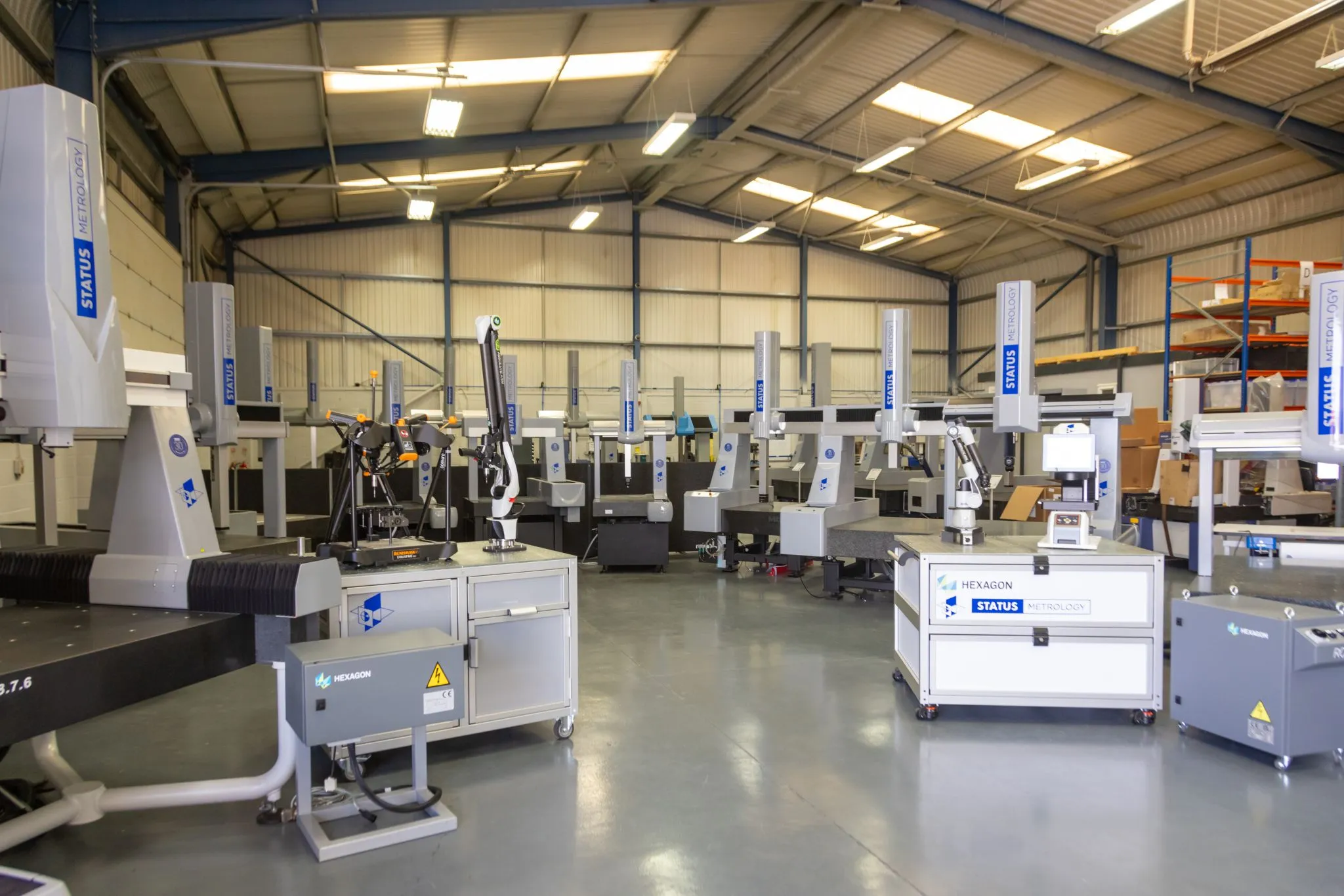
One of the biggest misconceptions we come across when manufacturers are building a business case for a coordinate measuring machine (CMM) is that the conversation quickly becomes about the purchase price.
That’s understandable. Whether the investment is £30,000, £80,000 or considerably more, it’s a significant purchase that should come under scrutiny.
The purchase price is only part of the picture. In our experience, the more useful conversation is usually about what a CMM can save. That’s where the business case often starts to make sense.
Looking at it that way often changes the conversation. A CMM isn’t simply a more accurate way of measuring parts. It can reduce the cost of poor quality through faster inspection, fewer quality issues reaching customers, less rework and greater confidence in the components leaving the business.
Looking Beyond the Purchase Price
It’s easy to compare CMMs based on what they cost. It’s much harder to calculate the cost of poor quality.
A faulty component rarely costs you just once. It often leads to rework, engineering investigations, production delays, customer complaints and missed delivery dates. Individually those problems might not seem particularly expensive, but together they quietly erode profitability.
There’s an old principle in manufacturing that producing a bad part effectively costs three times. First, you manufacture the faulty component. Then you manufacture the replacement. Finally, you lose the opportunity to spend that time producing something you could actually invoice.
Those costs rarely appear on the purchase order for a new CMM, but they’re often the reason manufacturers begin looking at one in the first place.
Inspection is often viewed as the final stage before dispatch, but in reality it affects everything that follows.
Many people see it as the final stage before dispatch, but in reality it affects everything that follows. Until components have been inspected and approved, they’re often sitting in work in progress. They can’t move to the next operation, they can’t be dispatched and, in many cases, they can’t be invoiced. When inspection becomes a bottleneck, production slows with it.
We’ve also seen businesses reach the point where skilled quality engineers spend more time measuring components than improving quality. Manual inspection and subcontract measurement both have their place, but there comes a point where neither is the most efficient option. That’s often when bringing inspection in-house starts making commercial sense.
The machine itself is only part of the equation. Increasingly, some of the biggest productivity gains come from the software.
Features within PC-DMIS, including offline programming, model-based inspection and optimisation tools, reduce the time spent creating inspection routines from scratch, allowing experienced programmers to focus on validating, refining and improving inspection strategies instead.
New or Refurbished?
Another assumption we occasionally come across is that improving inspection automatically means buying a brand-new CMM. It doesn’t.
Many manufacturers achieve exactly what they need with a professionally refurbished machine.
If the application is right, a refurbished CMM can significantly reduce the initial investment while still providing the accuracy, capability and reliability required for day-to-day inspection. That can make it much easier to justify bringing measurement in-house, particularly where inspection volumes have grown but budgets remain tight.
Ultimately, the decision shouldn’t begin with whether the machine is new or refurbished. It should begin with what you’re trying to achieve.
Once that’s understood, recommending the right solution becomes much easier.
So, Is a CMM Worth the Investment?
For many manufacturers, yes. Not because owning a CMM is the objective, but because better measurement reduces costs in places that aren’t always obvious. Less scrap. Less rework. Faster inspection. Greater confidence in the parts leaving the business. Fewer surprises further down the production process.
The strongest business cases rarely begin with the specification of the machine. They begin by asking a much simpler question. What is poor quality already costing the business?
Once you start answering that honestly, the return on investment often looks very different.
Thinking about investing in a CMM?
If you’re weighing up whether a CMM is the right investment, we’re happy to help. Tell us about your application and we’ll review your requirements before recommending the most practical way forward. That might be a new CMM, a professionally refurbished machine or a different inspection solution. Get in touch to talk through your application and discuss the best option for your business.
Frequently Asked Questions
Our Proud Partners







 +44 (0) 1159 392 228
